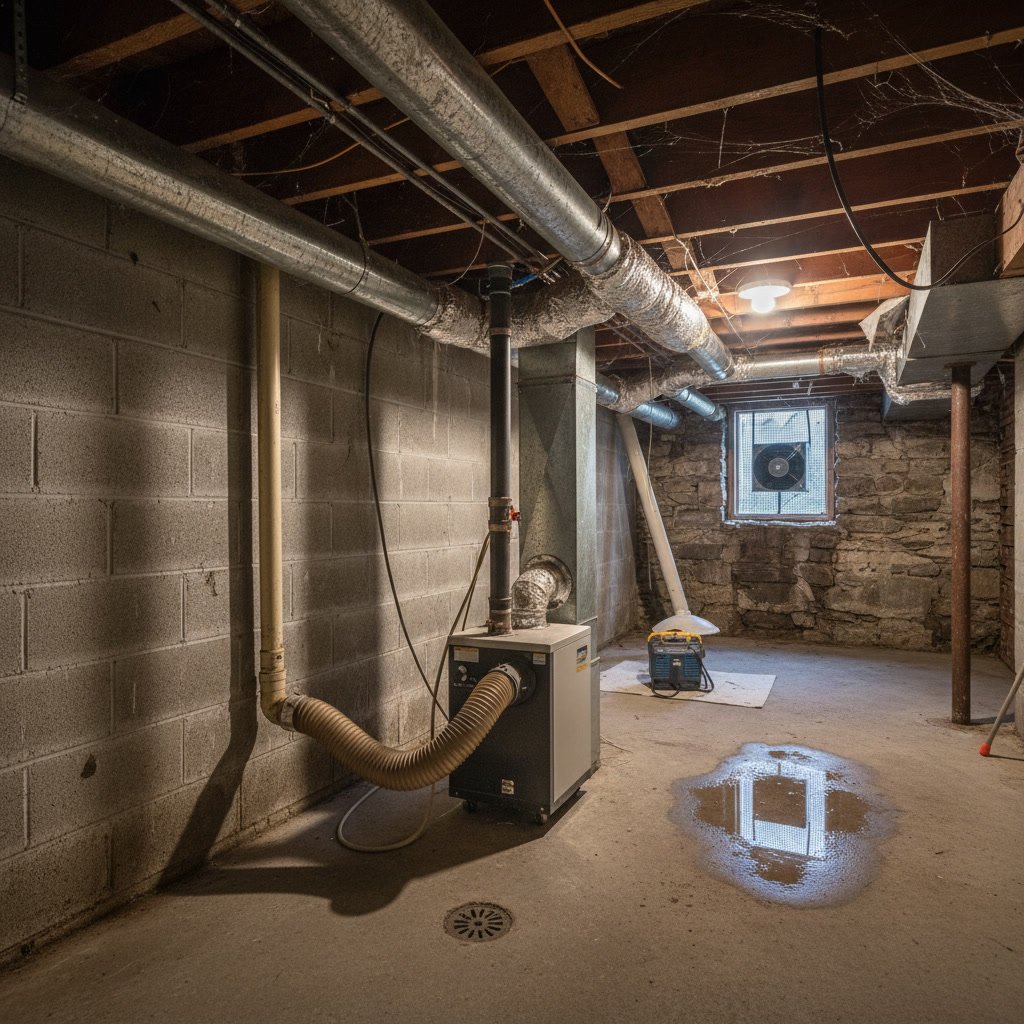
Damp basements and crawl spaces plague many Northwood homes, especially during New Hampshire’s humid summers and wet spring seasons. The musty smell, condensation on walls, and visible moisture are all signs that your basement lacks proper air circulation. Understanding the different basement ventilation types available and which one works best for your specific situation can save you thousands in future repairs and protect your family’s health.
The right ventilation system depends on your basement’s current condition, how you use the space, and the severity of moisture problems. Some homes benefit from simple passive ventilation, while others need mechanical systems to keep air moving and humidity under control. In areas like Northwood, NH, where seasonal temperature swings and groundwater issues are common, choosing the correct system makes all the difference.
Why Basement Ventilation Matters in Northwood Homes
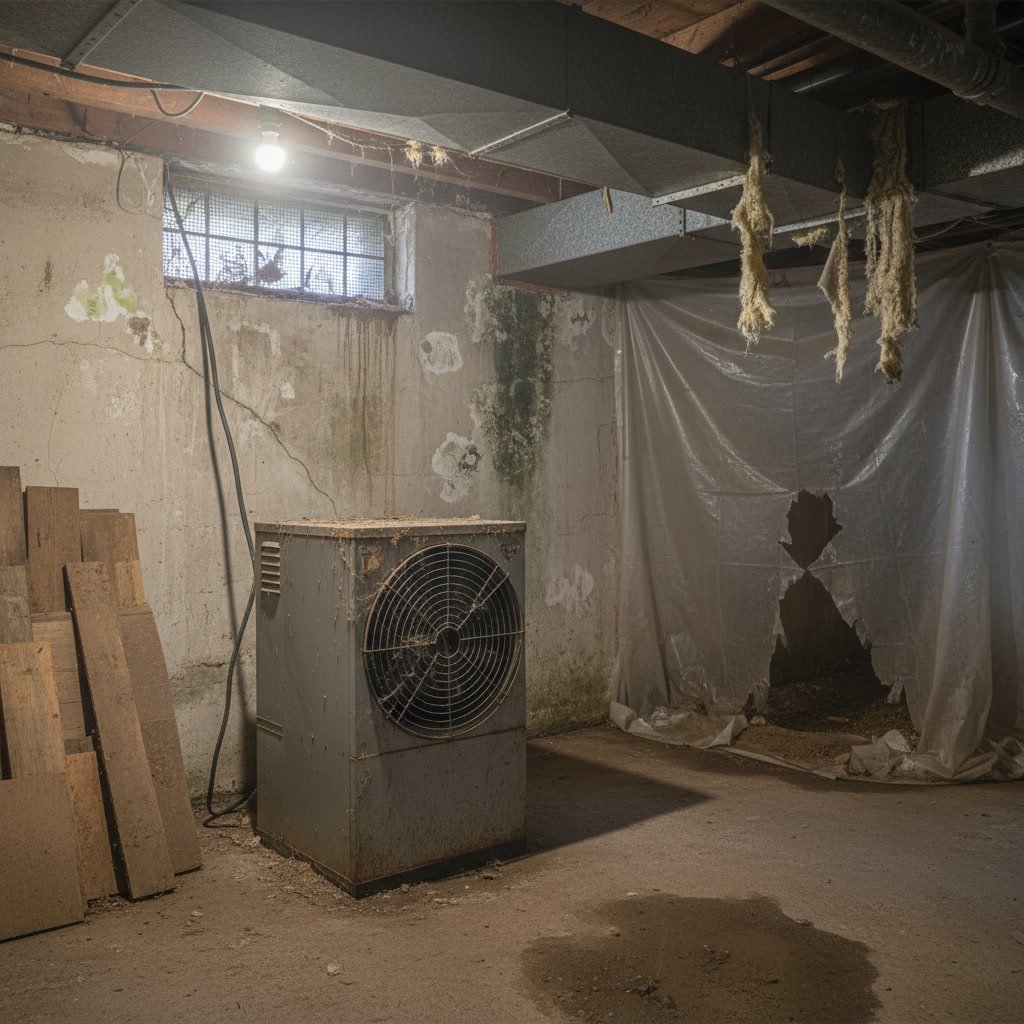
Basements and crawl spaces naturally trap moisture because they sit below ground level. Concrete walls absorb groundwater, humid air settles in low areas, and without proper air exchange, that moisture has nowhere to go. The result is a breeding ground for mold, wood rot, and musty odors that eventually spread throughout your home.
Northwood’s climate makes this problem worse. Summer humidity can push indoor moisture levels above 60%, while spring thaw brings groundwater pressure against foundation walls. Without adequate ventilation, that moisture condenses on cool surfaces, soaks into wood joists, and creates perfect conditions for mold growth.
Poor ventilation also affects your home’s air quality. Studies show that up to 50% of the air on your home’s first floor comes from the basement or crawl space. If that air is damp and moldy, it circulates through your living areas every time your HVAC system runs.
A properly designed ventilation system addresses these issues by maintaining consistent air circulation and keeping humidity levels between 30% and 50%, the range where mold can’t thrive and wood stays dry.
Passive Ventilation Systems
Passive ventilation relies on natural air movement through vents, without fans or mechanical equipment. Air enters through lower vents and exits through higher ones, creating a natural flow as warm air rises. This is the simplest and least expensive basement ventilation type.
How Passive Systems Work
Passive systems use foundation vents placed near the top of basement walls or in crawl spaces. The temperature difference between inside and outside air creates pressure that pulls fresh air in and pushes stale air out. This works best when there’s a significant temperature gradient and when vents are positioned to catch prevailing winds.
In crawl spaces, passive vents are typically spaced every 10 feet around the perimeter. For basements, window wells with vented covers can serve the same purpose. The key is creating cross-ventilation, with intake vents on one side and exhaust on the opposite side.
When Passive Ventilation Works
Passive ventilation works well in dry climates or for homes with minimal moisture issues. If your basement stays relatively dry except during heavy rainstorms, and you don’t smell mold or see condensation, passive vents might provide enough air exchange.
However, passive systems have significant limitations in humid climates like New Hampshire. During summer, when outdoor air is more humid than basement air, passive vents actually bring moisture in rather than removing it. This makes existing dampness worse and can trigger new mold growth.
Pro Tip: Many older homes have passive foundation vents that should be sealed. In humid climates, closed crawl spaces with mechanical ventilation or dehumidification systems perform better than vented crawl spaces.
Mechanical Exhaust Ventilation
Mechanical exhaust systems use fans to actively pull air out of your basement or crawl space. This creates negative pressure that draws fresh air in through passive intake vents or small gaps in the foundation. These systems offer more control than passive ventilation and work regardless of outdoor conditions.
Exhaust fans are typically mounted in walls or windows and run continuously at low speed or on timers that cycle them several times per day. The fan pulls humid basement air outside while replacement air enters through designated intake points.
Benefits of Exhaust Systems
Exhaust ventilation gives you predictable air exchange rates. Unlike passive systems that depend on weather conditions, fans move a consistent volume of air. You can size the fan to match your basement’s square footage and moisture load.
These systems cost less to install than full mechanical systems because you only need to power the exhaust fan. Intake air enters passively, so there’s no need for ductwork or multiple fan units. Operating costs are minimal, typically adding 10 to 30 dollars per month to your electric bill depending on fan size and runtime.
Limitations to Consider
Exhaust-only systems can’t control the quality of incoming air. If you’re pulling in humid outdoor air during summer, you’re not solving the moisture problem. In fact, you might make it worse by introducing more humidity than the basement can handle.
These systems also create negative pressure that can interfere with combustion appliances like furnaces and water heaters. If your basement houses these appliances, you need to ensure adequate combustion air supply or consider a different basement ventilation type.
Mechanical Supply Ventilation
Supply ventilation works opposite to exhaust systems. A fan brings fresh outdoor air into your basement while stale air escapes through passive vents or gaps. This creates positive pressure that prevents outdoor air from seeping in through foundation cracks and helps control indoor air quality.
Supply fans can include filters to remove pollen, dust, and outdoor pollutants before air enters your basement. Some systems also pre-condition incoming air, warming it in winter or cooling it in summer to reduce the temperature shock when it enters your space.
When Supply Ventilation Makes Sense
Supply systems work well when you want control over incoming air quality. If your basement is used as living space or a home office, filtered supply air keeps the environment comfortable and clean. The positive pressure also helps prevent radon gas from entering through foundation cracks.
Like exhaust systems, supply ventilation alone doesn’t solve humidity problems in damp climates. You’re still bringing in outdoor air that may be humid. For homes with persistent moisture issues, supply ventilation works best when paired with a dehumidifier or as part of a balanced system.
Balanced Ventilation and HRV Systems
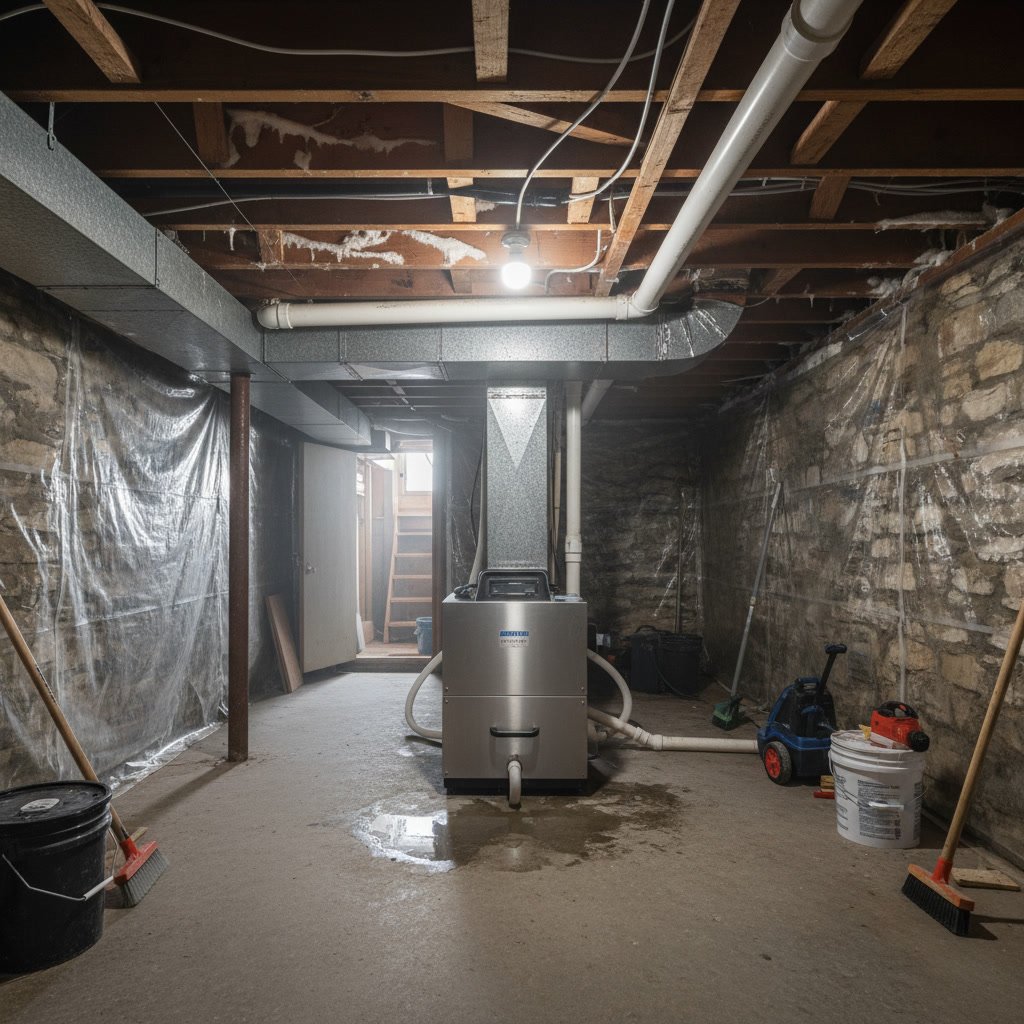
Balanced ventilation uses both supply and exhaust fans to control exactly how much air enters and leaves your basement. Heat recovery ventilators (HRVs) and energy recovery ventilators (ERVs) take this further by transferring heat and humidity between incoming and outgoing air streams, making the system more efficient.
An HRV pulls stale air out while bringing fresh air in, passing both air streams through a heat exchanger. In winter, outgoing warm air preheats incoming cold air. In summer, the process reverses. This maintains ventilation without the energy penalty of heating or cooling unconditioned outdoor air.
HRV vs ERV Systems
HRVs transfer heat only. ERVs transfer both heat and moisture, making them better for humid climates. During summer, an ERV removes some moisture from incoming air before it enters your basement. During winter, it prevents your basement from becoming too dry.
For New Hampshire homes, ERVs typically perform better because they address both temperature and humidity. An ERV combined with proper vapor barrier installation creates a comprehensive moisture management system.
Installation Considerations
Balanced systems require ductwork for both supply and exhaust air, making them more complex and expensive to install than single-fan systems. You need separate ducts to distribute fresh air throughout the basement and collect stale air from multiple points.
Installation costs typically range from 1,500 to 4,000 dollars depending on basement size and duct complexity. Operating costs run higher than simple exhaust fans because you’re powering two fans continuously, though the heat recovery partially offsets this by reducing heating and cooling loads.
Despite higher costs, balanced systems offer the best performance for finished basements or homes with serious moisture problems. They give you complete control over air quality, humidity levels, and energy efficiency.
Dehumidification as Ventilation
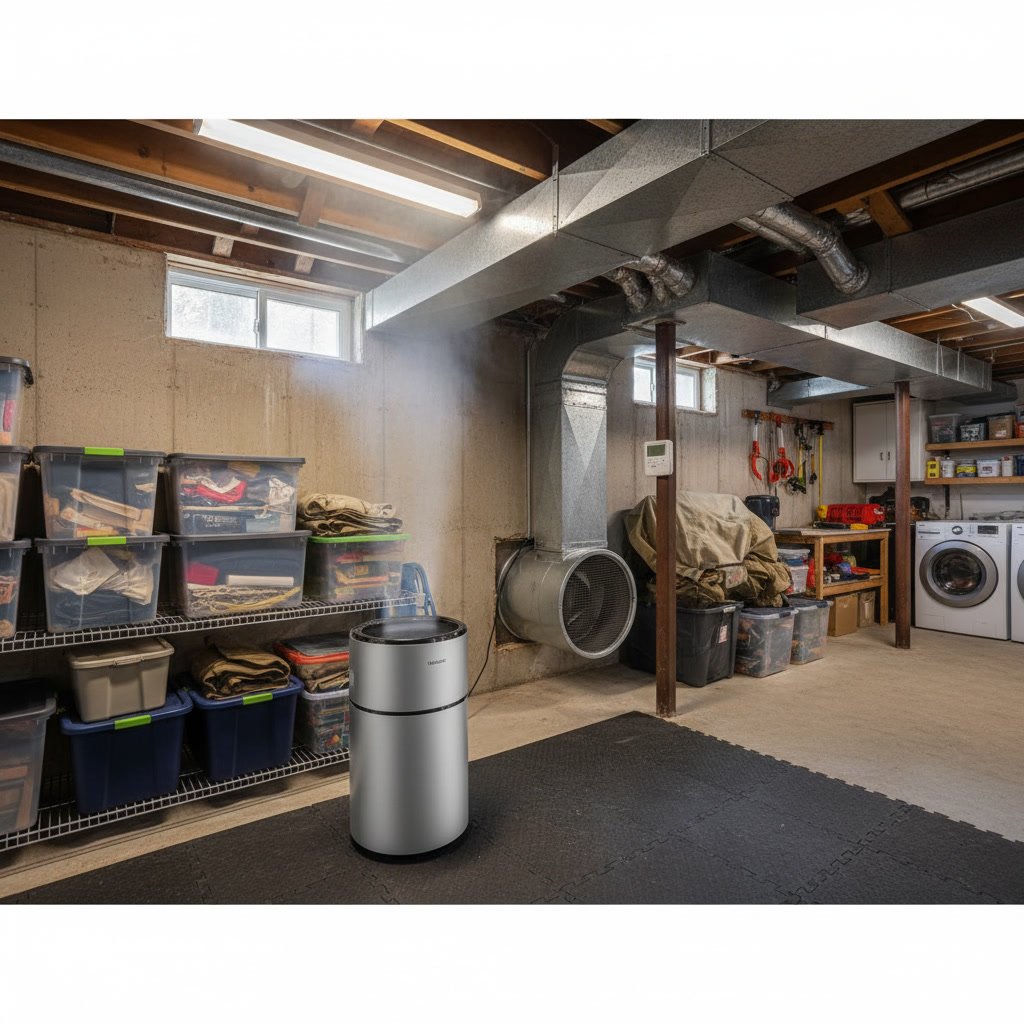
While not technically a basement ventilation type, whole-house dehumidifiers often solve moisture problems that ventilation alone can’t address. These units remove water directly from basement air without bringing in potentially humid outdoor air.
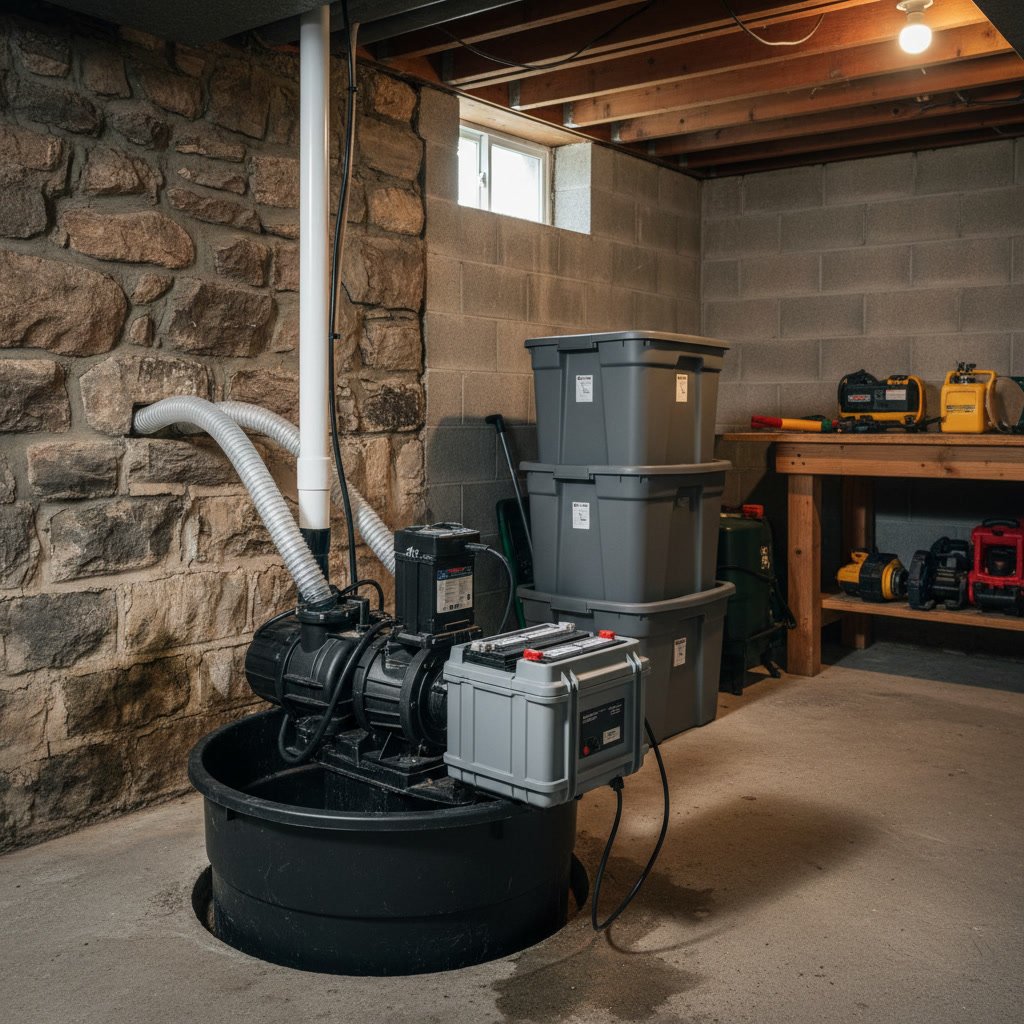
A properly sized dehumidifier can extract 50 to 100 pints of water per day from damp basements. Many systems tie into existing drainage systems or sump pumps, so you never have to empty water buckets.
Combining Dehumidification with Ventilation
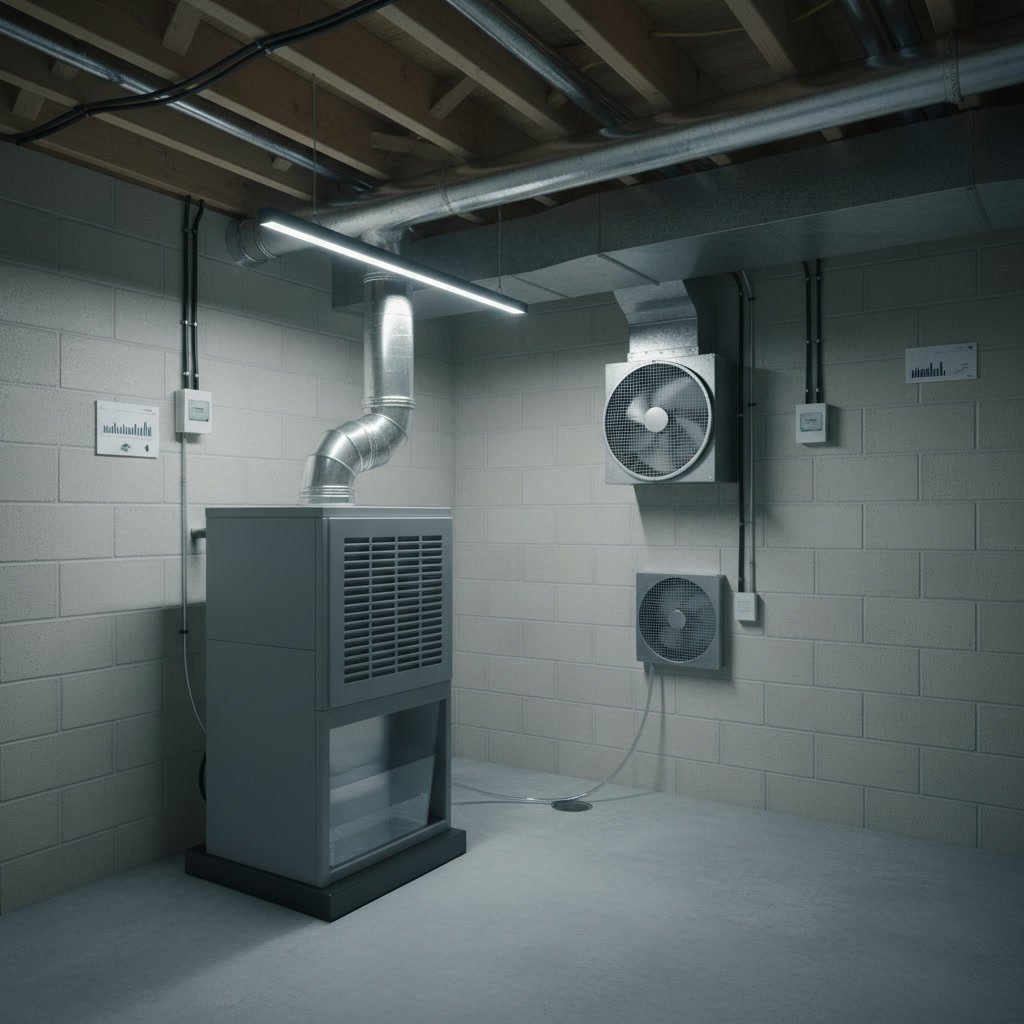
The most effective approach for New Hampshire basements combines controlled ventilation with active dehumidification. An exhaust fan or ERV provides fresh air exchange while a dehumidifier maintains humidity between 30% and 50% regardless of outdoor conditions.
This hybrid approach solves multiple problems. Ventilation removes indoor pollutants and prevents air stagnation. Dehumidification directly addresses moisture without depending on outdoor conditions. Together, they create a basement environment where mold can’t grow and stored items stay dry.
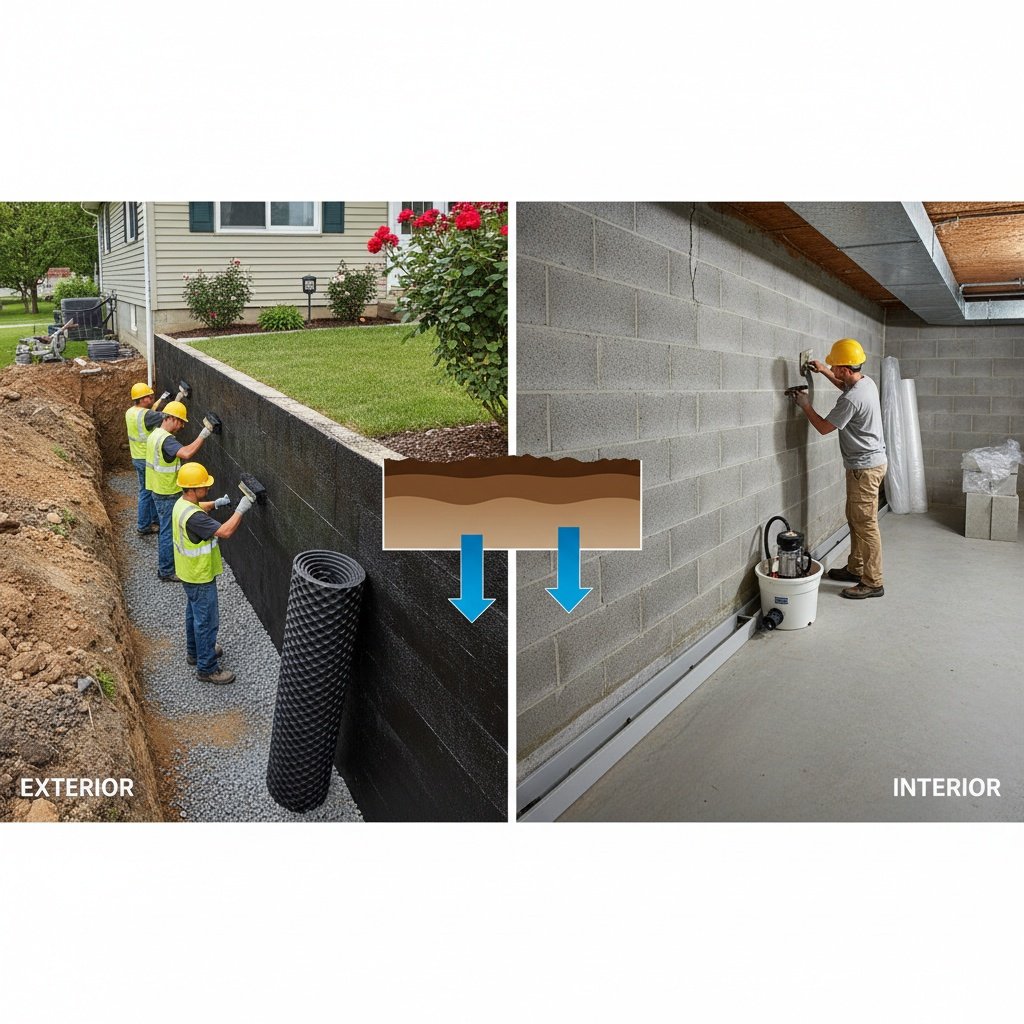
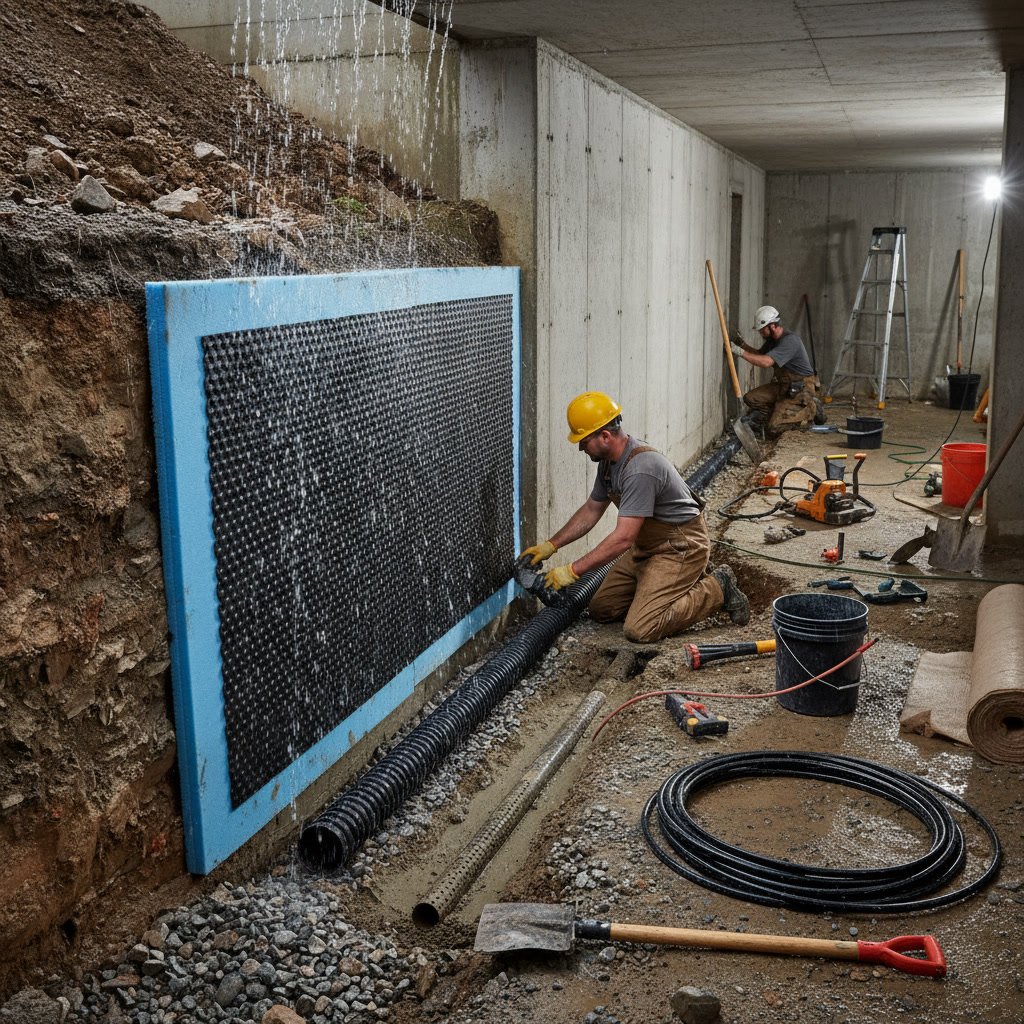
For homes that have already addressed exterior water issues through proper basement waterproofing and functioning sump pumps, this combination typically provides complete moisture control.
Choosing the Right System for Your Northwood Home
The best basement ventilation type for your home depends on several factors. How severe is your moisture problem? Is your basement finished or unfinished? Do you have existing HVAC ductwork that could tie into a ventilation system? What’s your budget for both installation and ongoing operation?
Start by assessing your current conditions. If you see standing water, extensive efflorescence on walls, or active mold growth, ventilation alone won’t fix the problem. You need to address water intrusion first through proper waterproofing, drainage, and possibly crawl space waterproofing.
Once bulk water is controlled, choose your ventilation strategy based on humidity levels. If a hygrometer shows basement humidity consistently above 60%, you need mechanical dehumidification regardless of which ventilation type you install. If humidity stays between 50% and 60%, mechanical ventilation alone might bring it down to safe levels.
Climate-Specific Recommendations
For Northwood and similar New Hampshire locations, closed crawl space designs with conditioned air generally outperform vented crawl spaces. Instead of foundation vents that bring in humid summer air, seal the crawl space and extend your home’s heating and cooling system into the space. Add a dehumidifier if needed to maintain proper humidity year-round.
For full basements, an ERV system paired with a dehumidifier provides excellent year-round performance. Size the ERV to exchange all basement air once every three to six hours and set the dehumidifier to maintain 45% relative humidity. This combination handles both air quality and moisture control efficiently.
Key Takeaway: No single ventilation system works for every home. The most reliable approach combines exterior water management, proper ventilation, and active dehumidification sized to your specific conditions.
Professional Assessment and Installation
While some ventilation improvements are DIY-friendly, proper system design requires understanding building science principles. Incorrect ventilation can actually make moisture problems worse by introducing humid air, creating negative pressure that draws in radon, or failing to exchange air in dead zones where mold grows.
A professional assessment examines your home’s specific conditions including foundation type, existing moisture sources, current humidity levels, and how the basement connects to upper floors. This information determines which basement ventilation types will actually solve your problem rather than waste money on equipment that doesn’t match your needs.
Professional installation also ensures systems are sized correctly. An oversized dehumidifier cycles on and off too frequently, reducing efficiency. An undersized ventilation fan doesn’t exchange air often enough to prevent moisture buildup. Proper sizing based on cubic footage, moisture load, and occupancy patterns makes the difference between a system that works and one that disappoints.
Maintenance Requirements
All mechanical basement ventilation types require regular maintenance to perform properly. Exhaust and supply fans need cleaning every six months to remove dust buildup that reduces airflow. Check that vent covers aren’t blocked by snow, leaves, or debris that prevent air exchange.
HRV and ERV systems require more attention. Clean or replace filters every three months during heavy use seasons. The heat exchange core needs annual cleaning to maintain efficiency. Drain lines that remove condensation should be checked to ensure they haven’t clogged or frozen.
Dehumidifiers need filter changes or cleaning monthly during peak season. Check drain lines to ensure water flows freely. Annual coil cleaning helps maintain efficient operation. Most units display error codes when something needs attention, making troubleshooting straightforward.
Set calendar reminders for these maintenance tasks. A well-maintained system lasts 10 to 15 years and operates efficiently throughout its lifespan. Neglected systems fail early and cost more to operate because dirty components reduce airflow and efficiency.
Frequently Asked Questions
Should I run basement ventilation fans continuously or on a timer?
Continuous low-speed operation works better than intermittent high-speed cycles for most homes. Running fans continuously at 50% to 70% capacity maintains steady air exchange and humidity control without the energy spikes of full-speed operation. Timer-based systems can work if the run cycles are long enough, typically four hours on and two hours off minimum.
Can I use a bathroom exhaust fan for basement ventilation?
Standard bathroom fans aren’t designed for continuous operation and typically fail within months if run constantly. Use fans rated for continuous duty, which have better motors and bearings. These cost 50 to 100 dollars more than bathroom fans but last years longer when operating 24/7.
Will ventilation alone prevent mold in my basement?
Ventilation helps prevent mold by reducing humidity and improving air circulation, but it can’t overcome bulk water problems or extremely humid conditions. If you have water seeping through foundation walls, condensation dripping from pipes, or outdoor humidity consistently above 80%, you need additional mold prevention measures like waterproofing and dehumidification.
How do I know if my current basement ventilation is working?
Place a hygrometer in your basement to measure relative humidity. Readings consistently above 60% indicate insufficient ventilation or dehumidification. Also check for musty odors, condensation on walls or pipes, and visible mold. These signs mean your current system isn’t adequate for the moisture load.
What ventilation changes should I make before finishing my basement?
Address all moisture issues before finishing. Install proper waterproofing, ensure drainage systems work correctly, and establish mechanical ventilation that maintains humidity below 50%. Once walls are finished, fixing water problems becomes much more expensive. Consider upgrading to an ERV system if you plan to use the basement as living space, since finished areas need better air quality control than storage spaces.
Get Professional Help for Your Northwood Basement
Choosing between basement ventilation types and implementing the right system for your home’s specific conditions requires experience with New Hampshire’s climate and building practices. What works in a dry climate often fails here, and generic advice from out-of-state sources doesn’t account for our seasonal humidity swings and groundwater challenges.
NH Dry Basement LLC has helped homeowners throughout Northwood and surrounding communities solve basement moisture problems with properly designed ventilation and waterproofing systems. As a family-owned business based in Barrington, we understand the specific challenges New Hampshire basements face and design solutions that work long-term, not just during installation.
If your basement stays damp despite your efforts, or if you’re not sure which ventilation approach makes sense for your home, give us a call at +16032359598. We’ll assess your current conditions, explain which systems will actually solve your problem, and provide honest guidance on the most cost-effective approach for your situation.