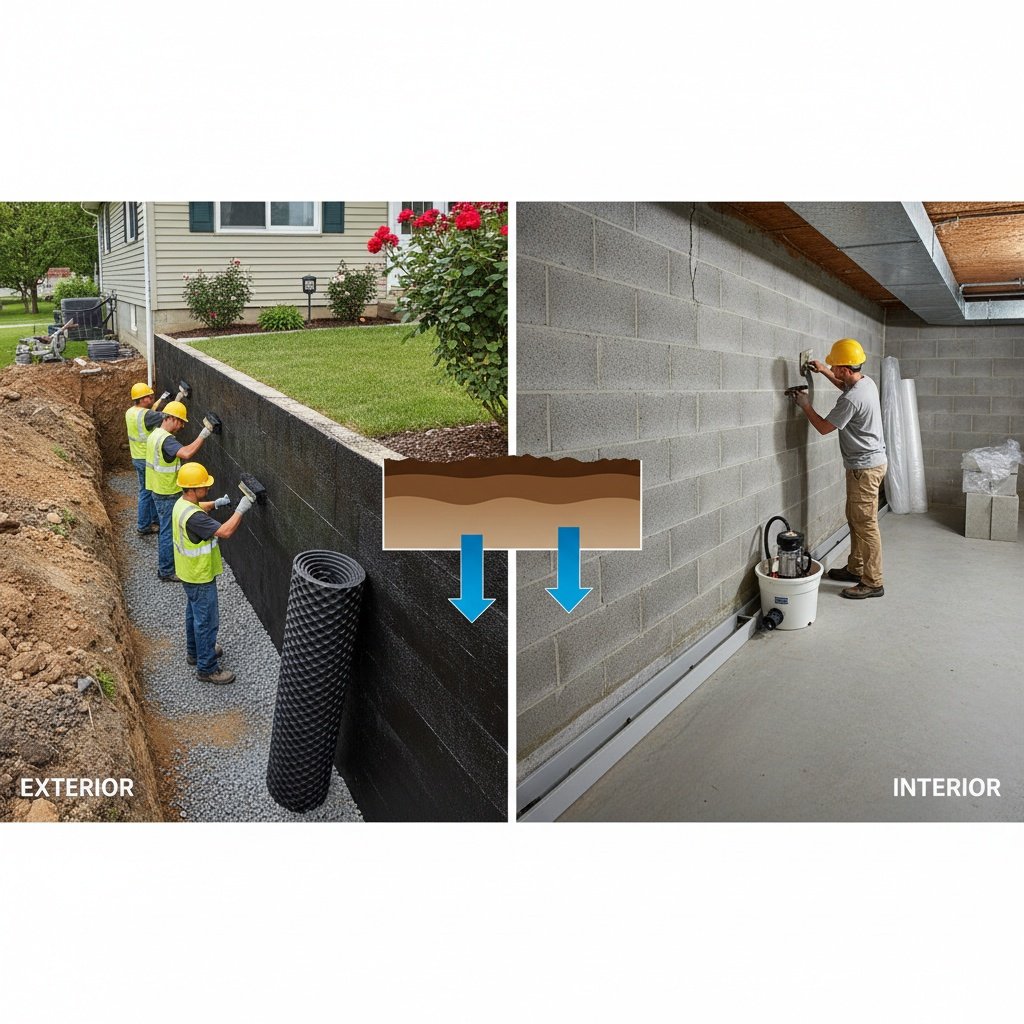
Exterior interior basement waterproofing methods each tackle water intrusion differently. Exterior systems prevent water from reaching foundation walls by redirecting groundwater away from the perimeter. Interior solutions manage water that has already penetrated the foundation, collecting and pumping it out before it floods your living space. Understanding the strengths and limitations of each approach helps you choose the right protection for your home and budget.
Why Water Finds Its Way Into Basements
Water moves through the path of least resistance. When rain saturates the soil around your foundation, hydrostatic pressure builds up and forces moisture through any available opening. Cracks in concrete, gaps at the foundation footing, porous block walls, and deteriorated mortar joints all provide entry points.
New Hampshire’s freeze-thaw cycles worsen these problems every winter. Water seeps into hairline cracks, freezes, expands, and widens those cracks over time. The same seasonal pattern that damages roads also attacks your foundation, creating new vulnerabilities each year.
Even well-built homes face water pressure. Clay-heavy soil holds water longer, keeping constant pressure against foundation walls. Homes built on slopes channel runoff directly toward the basement. These site-specific conditions determine which waterproofing approach works best.
How Exterior Waterproofing Stops Water Before It Enters
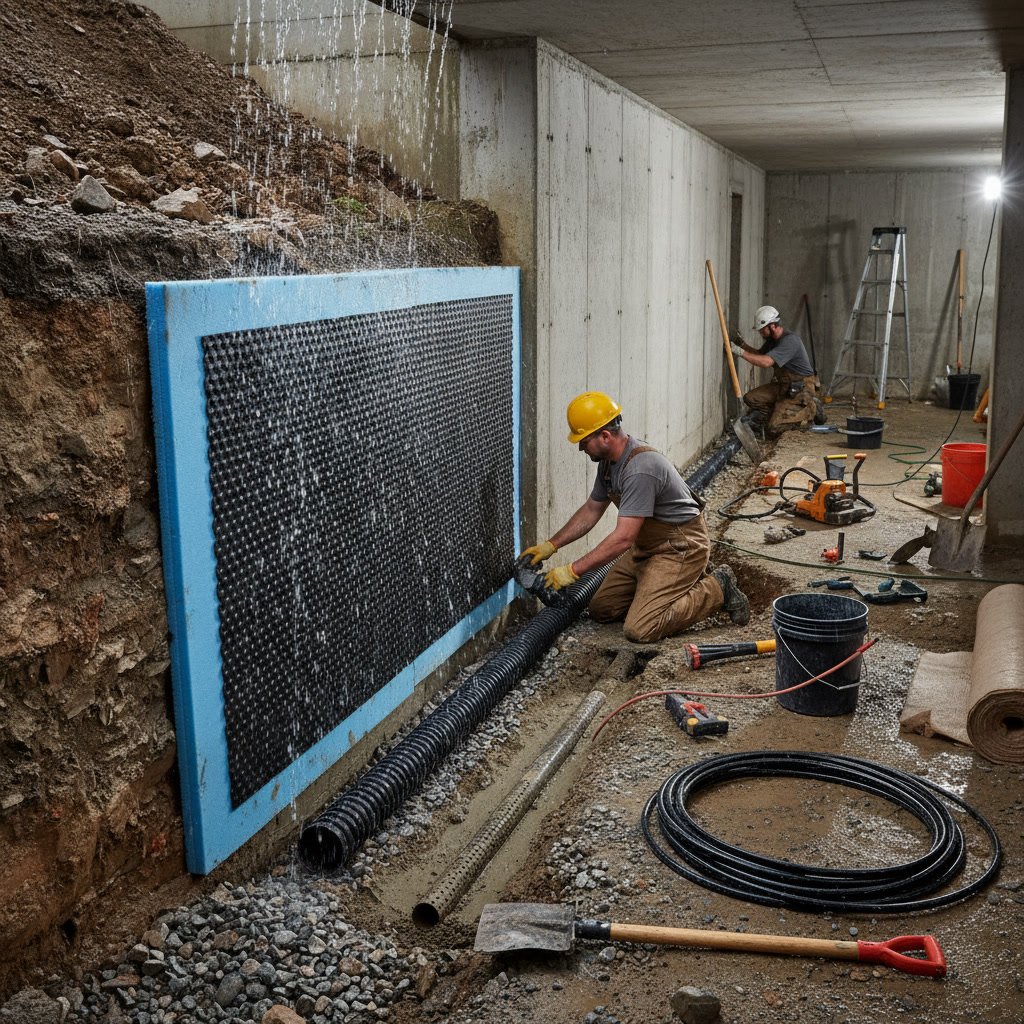
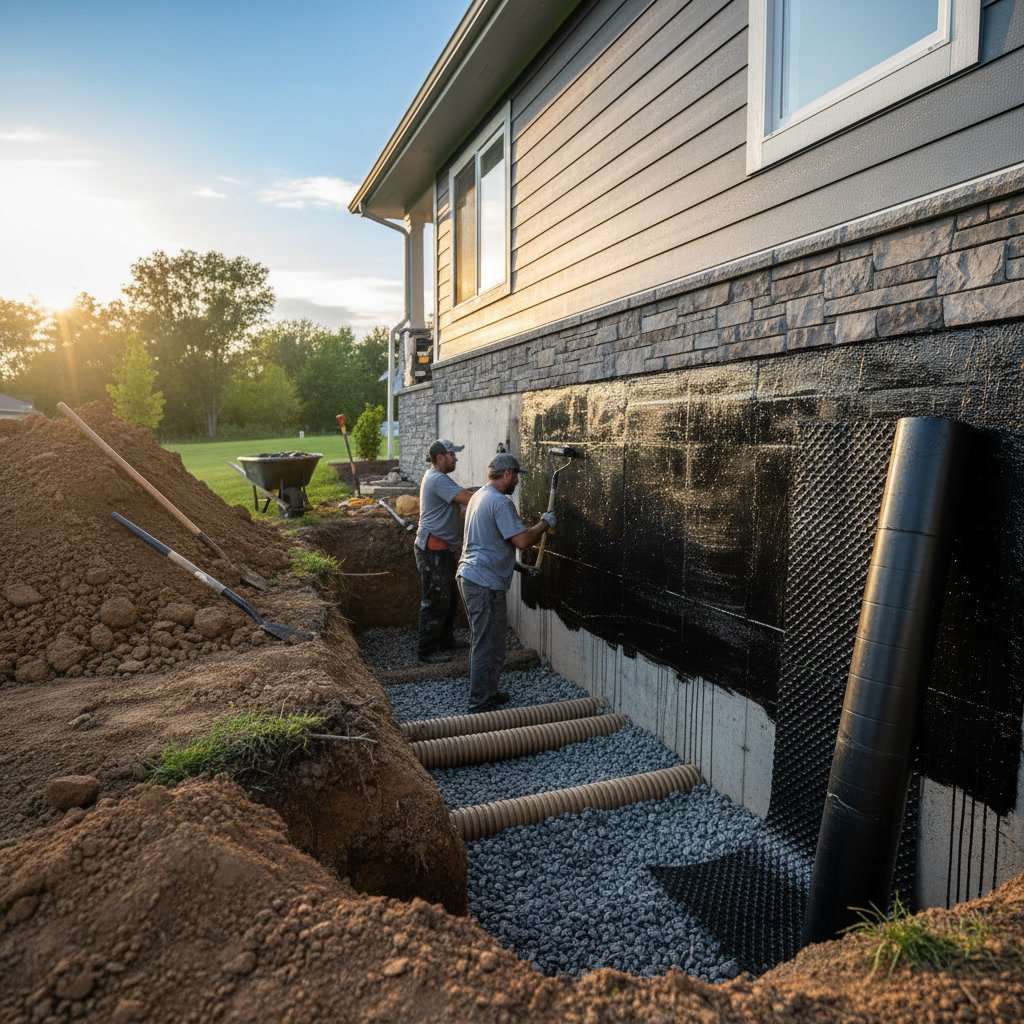
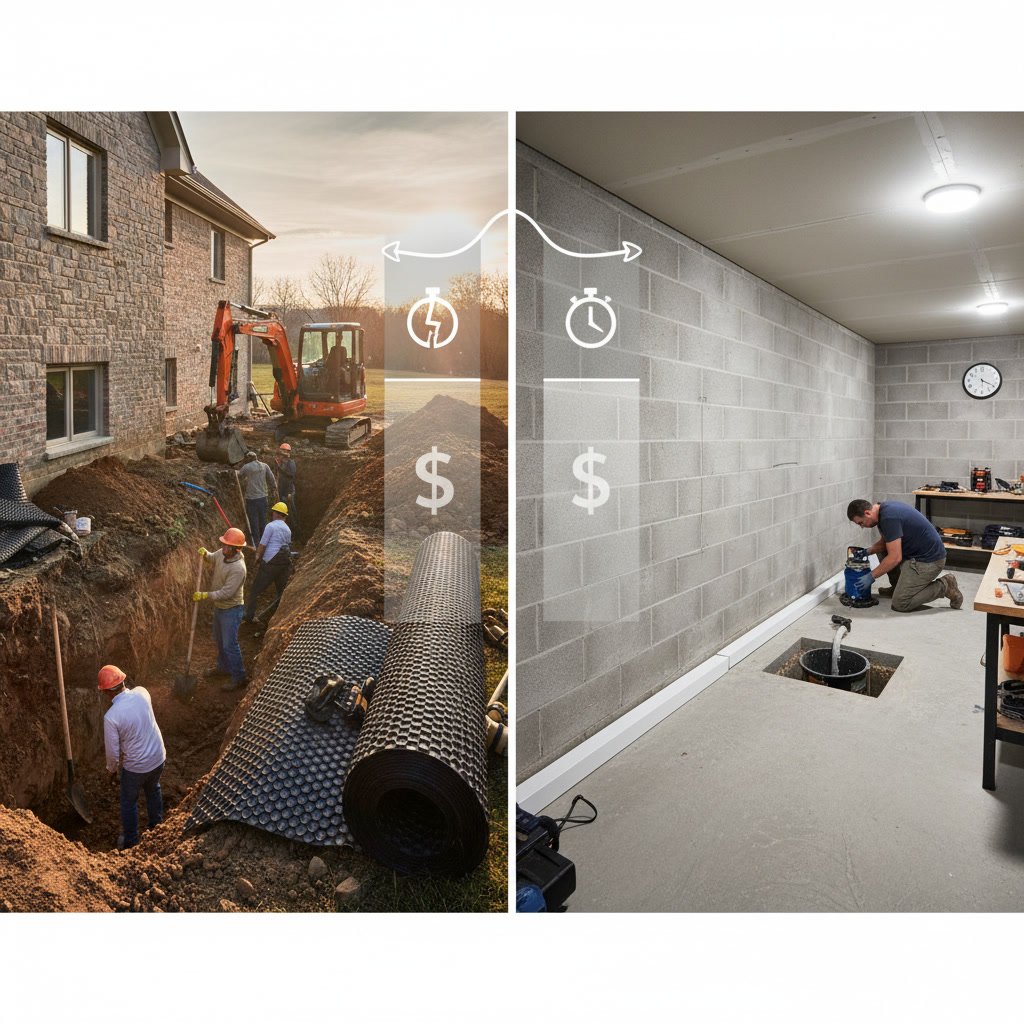
Exterior waterproofing treats the problem at its source. Contractors excavate the soil around your foundation down to the footer, exposing the entire exterior wall. They clean the surface, apply a rubberized or polymer waterproof membrane, and install a drainage board that channels water down to a perimeter drain.
The perimeter drain, typically a perforated pipe surrounded by gravel, captures groundwater and directs it away from the foundation to daylight or a dry well. This system prevents water from ever touching your foundation walls, eliminating hydrostatic pressure entirely.
This method also allows contractors to repair foundation cracks from the outside, seal gaps, and address structural issues before covering everything back up. The work is comprehensive but requires heavy equipment, significant excavation, and restoration of landscaping afterward.
When Exterior Systems Make the Most Sense
Exterior waterproofing works best during new construction or major renovation projects when the foundation is already accessible. If you’re adding an addition, replacing a septic system, or doing extensive landscaping work, the timing aligns perfectly with excavation needs.
Homes with severe foundation damage, widespread cracking, or failing exterior walls benefit most from outside access. You can repair structural problems while installing waterproofing, solving multiple issues in one project.
Finished basements present another strong case. If you’ve already invested in drywall, flooring, and built-in features, exterior work leaves your interior untouched. You avoid tearing out finished spaces to install interior systems.
The Interior Approach to Managing Water
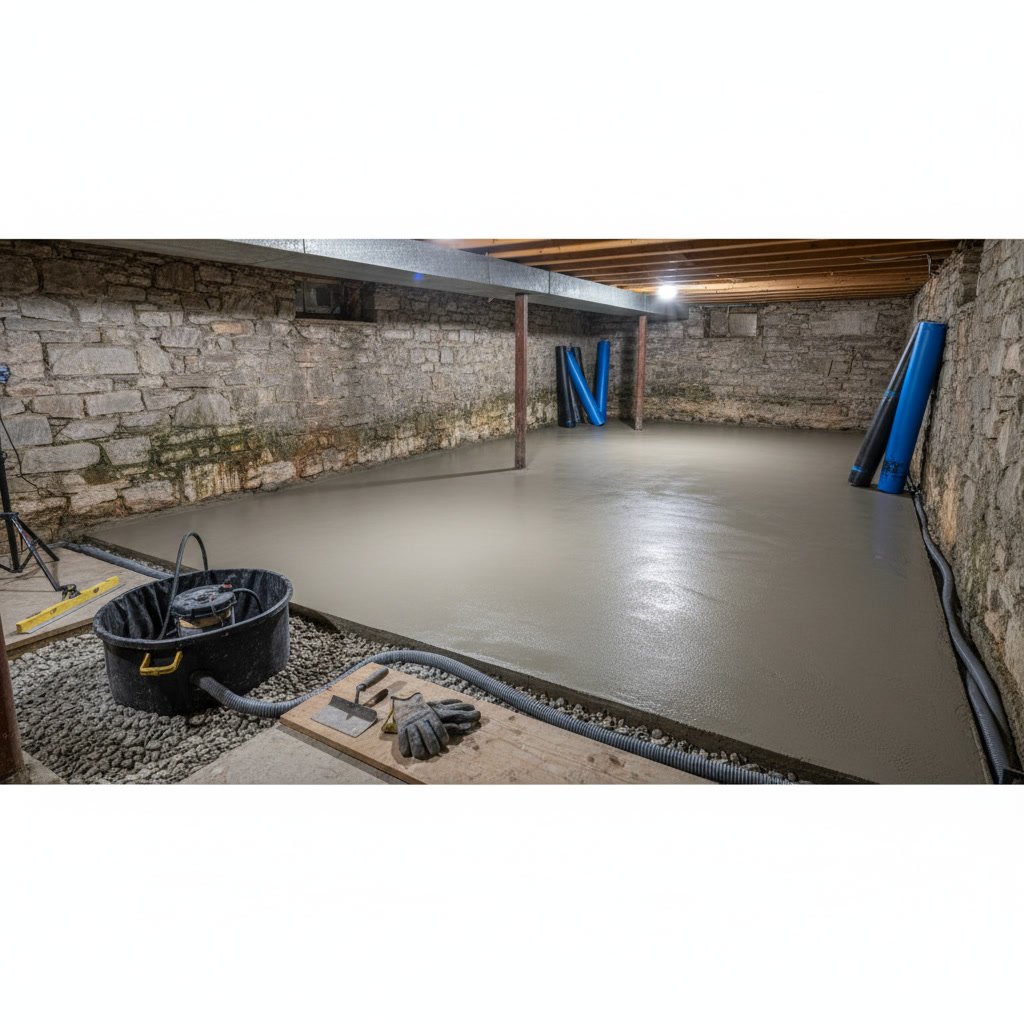
Interior waterproofing accepts that water will reach your foundation but prevents it from flooding your basement. A drainage system installed along the inside perimeter of the foundation captures water as it enters, channeling it to a collection point.
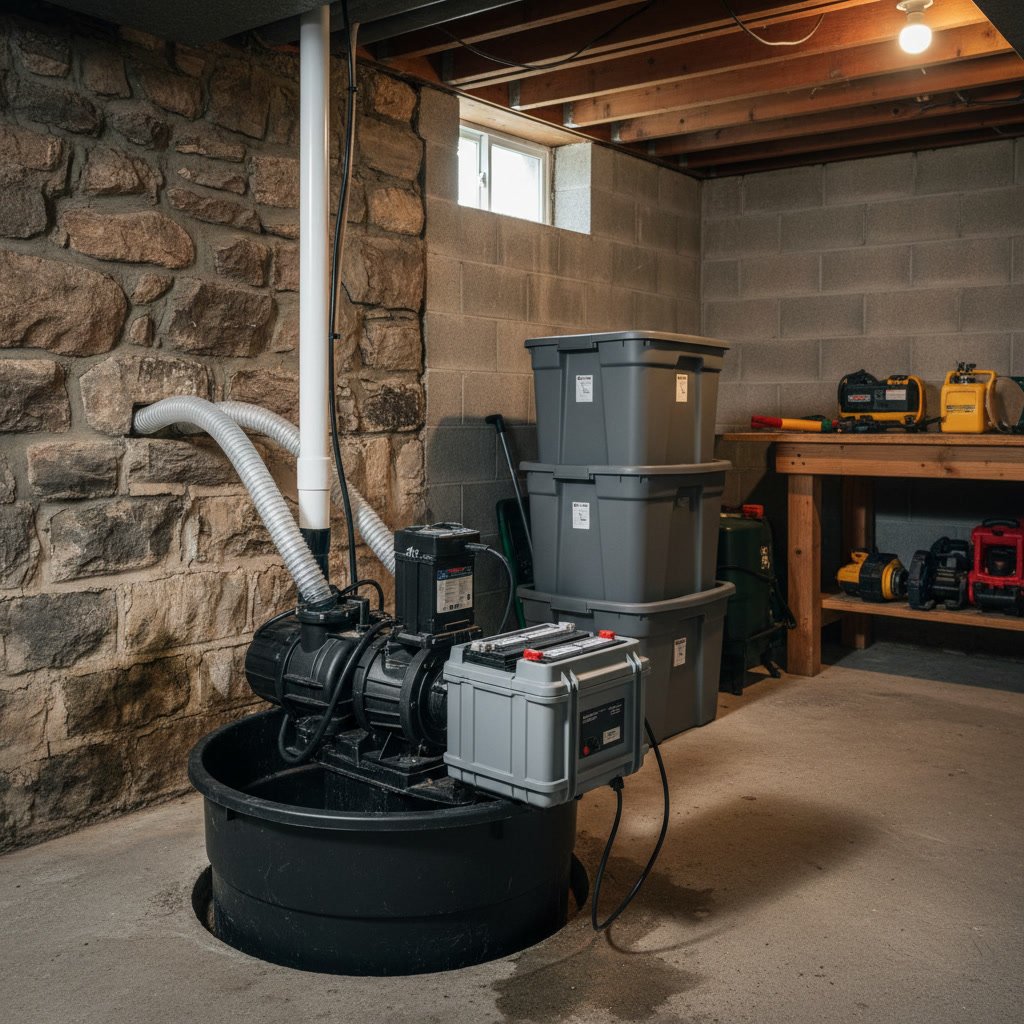
The most common interior system involves cutting a channel along the basement floor where it meets the wall, installing perforated pipe in a gravel bed, and connecting everything to a sump basin. A sump pump automatically removes collected water, discharging it outside away from the foundation.
Contractors seal wall cracks from the inside using hydraulic cement or epoxy injection. They may install vapor barriers on walls to control moisture transmission through porous concrete or block. The system works with gravity and mechanical pumping rather than trying to keep water away entirely.
Advantages of Working from Inside in More Dover
Interior systems cost significantly less because they require no excavation. Contractors work entirely within your basement, avoiding the expense of heavy equipment, soil removal, and landscape restoration. Most projects finish in two to three days instead of a week or more.
Weather and season don’t limit interior work. Frozen ground, snow cover, and mud all complicate exterior excavation, but interior installation proceeds year-round regardless of conditions outside.
Access proves easier in established neighborhoods where homes sit close together. You don’t need room for excavators or worry about damaging neighboring property. Driveways, patios, and permanent structures that block exterior access create no obstacles for interior solutions.
Comparing Cost, Disruption, and Longevity
Exterior waterproofing typically costs two to three times more than interior systems. You’re paying for excavation, membrane materials, backfill, and landscape restoration. A typical exterior project runs $15,000 to $30,000 for an average-sized home, while interior systems range from $5,000 to $12,000.
Disruption differs dramatically. Exterior work turns your yard into a construction site but leaves your basement untouched. Interior installation creates dust and noise inside but your landscaping remains pristine. Your lifestyle and priorities determine which disruption feels more manageable.
Properly installed exterior membranes last 25 to 30 years or more because they’re protected underground. Interior systems depend on mechanical components that require maintenance. Sump pumps last 7 to 10 years on average and need periodic replacement. Installing a battery backup system adds reliability during power outages.
Hybrid Systems That Use Both Methods
Some situations call for combining exterior and interior approaches. You might install exterior waterproofing on the most vulnerable wall where water pressure is highest, then add interior drainage as secondary protection.
Homes with walkout basements often use exterior methods on buried walls and interior systems near the walkout area where excavation is impractical. This targeted approach puts resources where they deliver the most benefit.
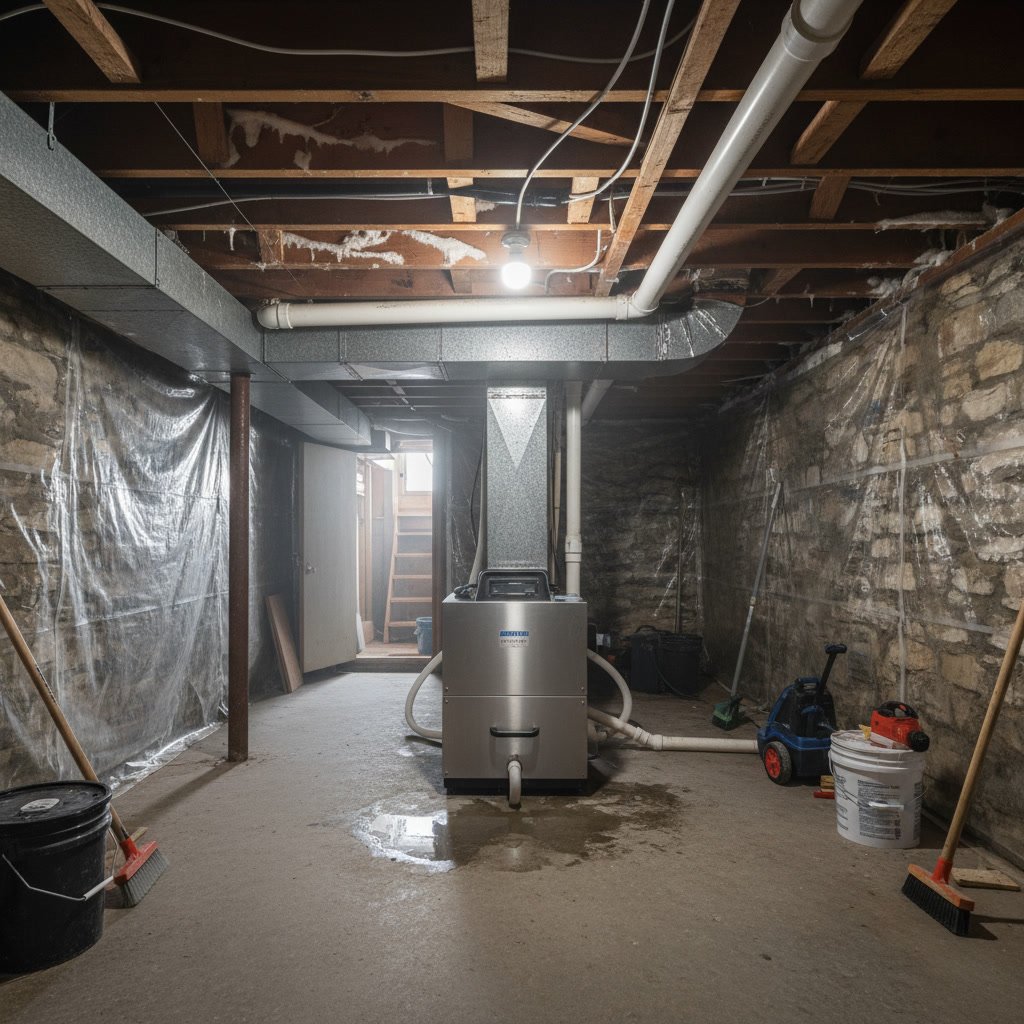
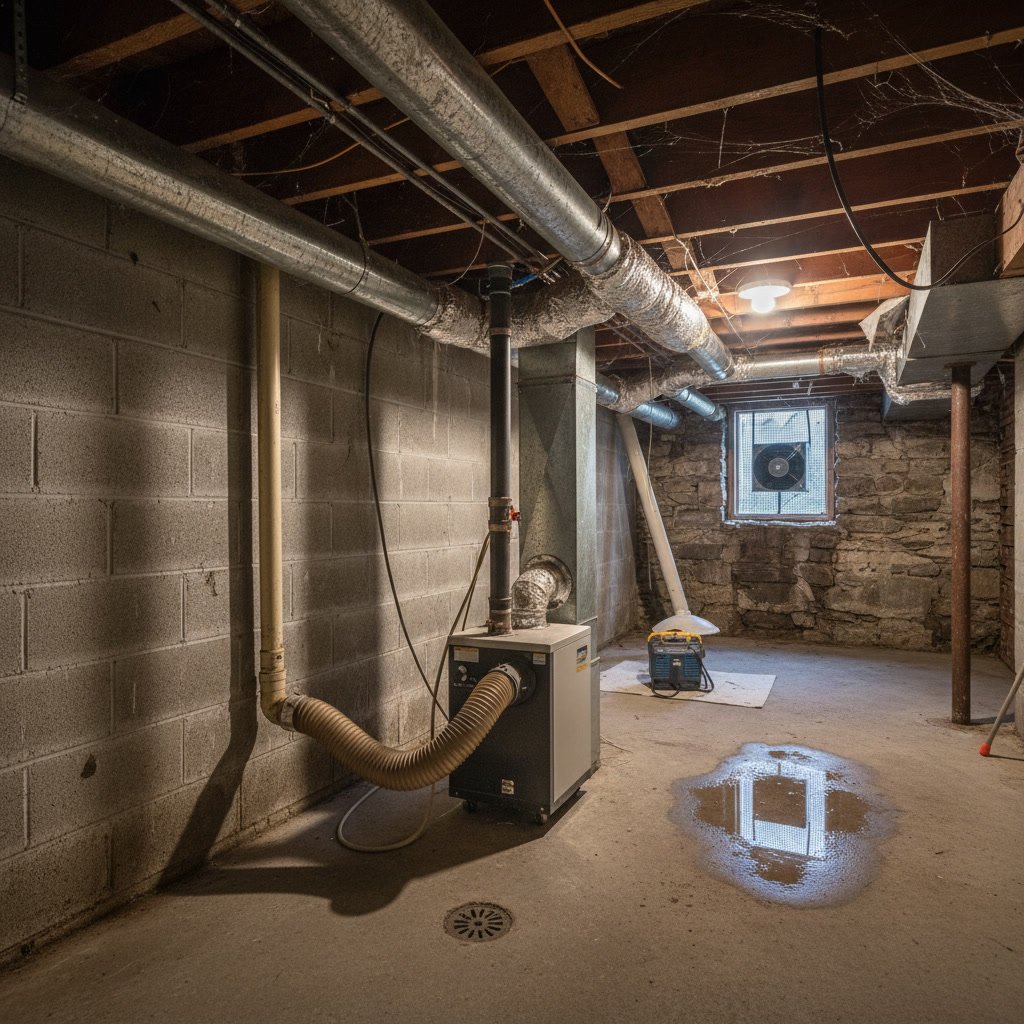
Adding basement dehumidification complements either method by controlling ambient moisture that enters through normal air exchange. Even waterproofed basements benefit from humidity control during humid New Hampshire summers.
Site Conditions That Dictate Your Options
High water tables limit exterior effectiveness. If groundwater sits just below your basement floor, perimeter drains fill constantly and may not relieve pressure adequately. Interior systems with properly sized pumps handle high water tables more reliably.
Bedrock close to the surface makes excavation difficult or impossible. Blasting rock dramatically increases costs and may not be practical in residential neighborhoods. Interior solutions avoid this obstacle entirely.
Soil type affects both approaches differently. Clay soil holds water against foundations, making exterior drainage more valuable. Sandy soil drains naturally but may allow water to flow under footings, where interior systems catch it effectively. Understanding your specific soil conditions guides the right choice.
What Professional Assessment Reveals
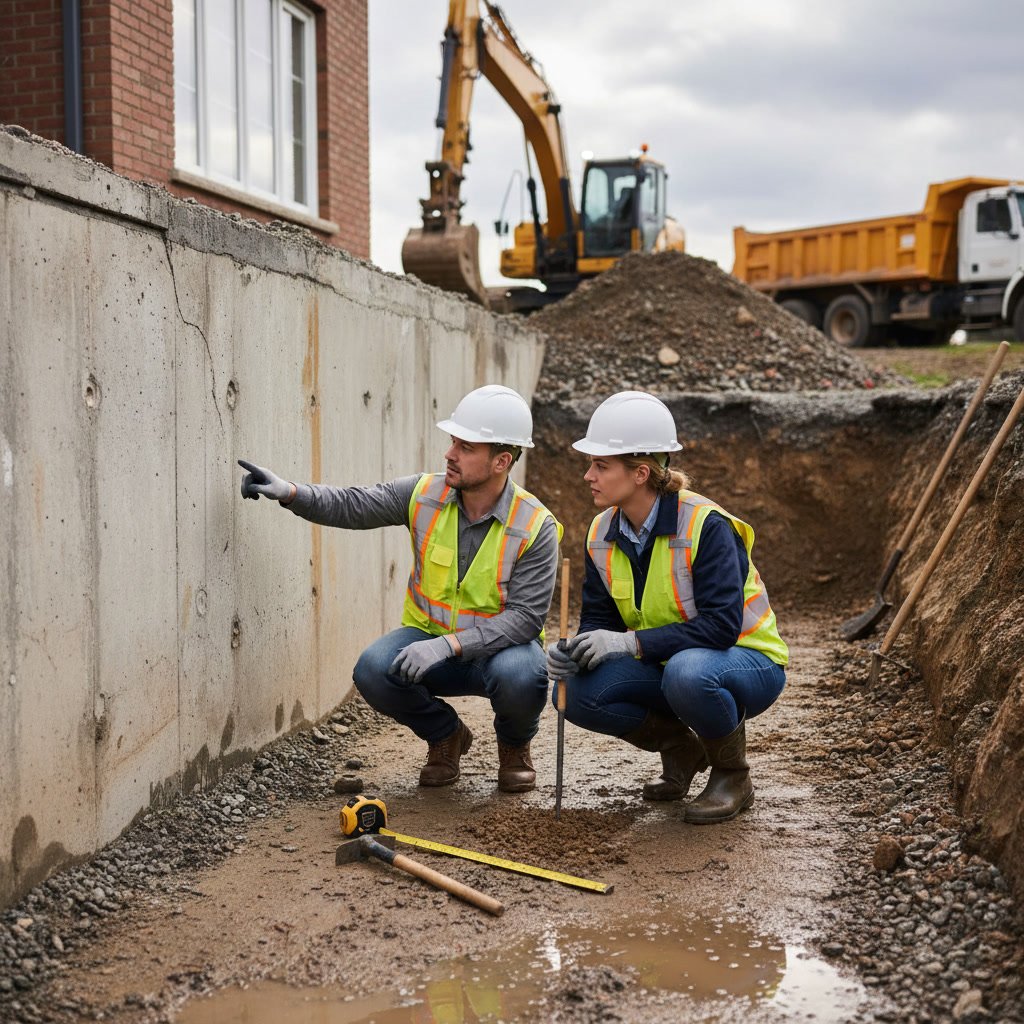
A thorough inspection identifies exactly where water enters and why. Contractors check for grading problems, clogged gutters, failed window wells, and foundation defects. Many water problems stem from simple drainage issues that neither exterior nor interior waterproofing addresses.
Fixing surface water problems first often reduces or eliminates basement leaking. Extending downspouts, regrading soil to slope away from the house, and repairing gutters costs far less than waterproofing. These fixes should happen regardless of which waterproofing method you choose.
Professional assessment also reveals whether your mold prevention needs extend beyond water control. Chronic moisture creates health hazards that require immediate attention, sometimes including removal of affected materials before waterproofing begins.
Making the Right Choice for Your Home
Interior systems solve most residential basement water problems effectively and affordably. They work well for typical seasonal seepage, minor cracks, and general moisture control. Most homeowners find interior solutions meet their needs without the expense and disruption of excavation.
Choose exterior waterproofing when you have significant foundation damage, when your basement is already finished, or when you’re doing other work that requires excavation anyway. The higher cost delivers superior long-term protection if your situation justifies the investment.
Budget matters, but so does solving the problem completely. A properly installed interior system from experienced contractors outlasts a poorly executed exterior job. Focus on quality installation and appropriate design for your specific conditions rather than choosing based on method alone.
Protecting Your Home for the Long Term
Both exterior and interior waterproofing methods protect basements when properly designed and installed. Exterior systems prevent water from reaching your foundation, while interior systems manage water that penetrates despite your best efforts. Most homes need interior drainage and pumping, while exterior work makes sense in specific circumstances.
The right solution depends on your home’s construction, site conditions, existing water problems, and budget. Professional evaluation identifies the root causes of water intrusion and designs systems that address your unique situation rather than applying one-size-fits-all solutions.
NH Dry Basement LLC has helped families throughout the seacoast region choose and install the waterproofing systems their homes actually need. Our team evaluates your foundation, explains your options clearly, and delivers reliable solutions backed by years of experience. If water threatens your basement or you want to understand which protection method fits your situation best, reach out at +16032359598 to schedule an assessment.